
Keeper at Home
or a note on mental health

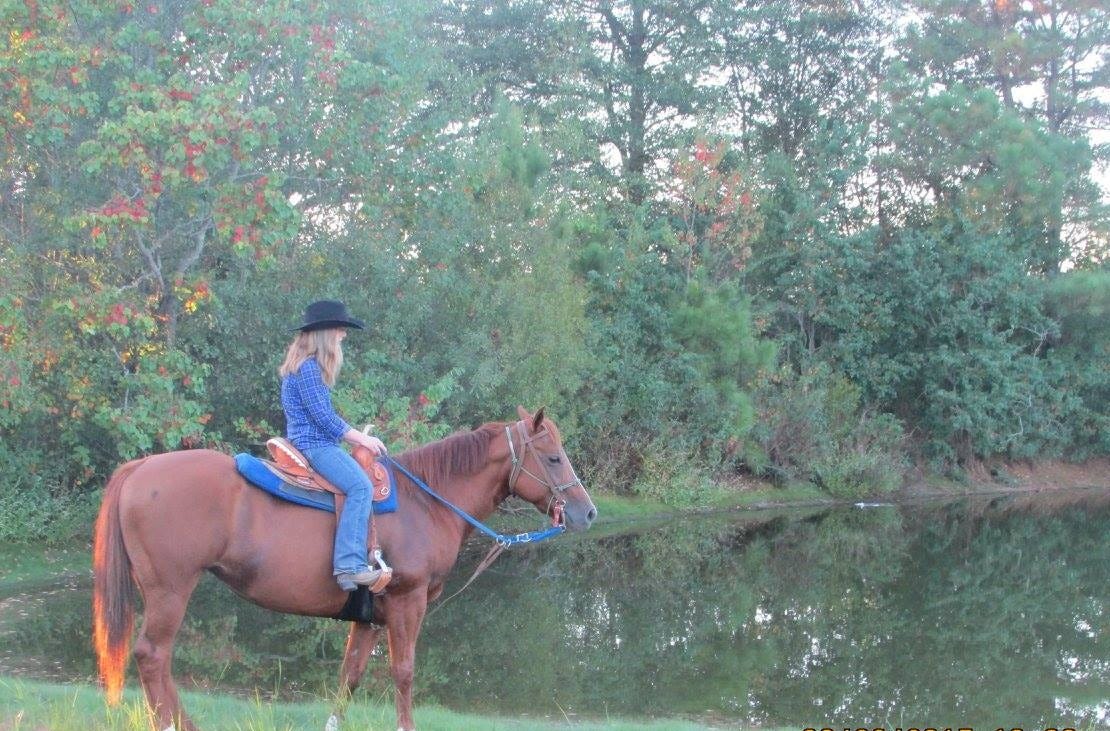
I had my first panic attack in September of 2015 after Cowboy Church. The details of it all are fuzzy, of course. Mom and I went to a church meeting in Louisiana, just across the state line. There are kids riding ponies and adults decked in the western attire I am accustomed to seeing at rodeos. My eyes are busy, watching everything in silence. For dinner there is a big pot of chili and hot dogs doled out on paper plates. The arena is a huge area of powdery tan dust covered by a metal roof. Today it is lined with white folding chairs. As the food is served and plates filled, people cluster together into those chairs in familiar, smiling groups. They all know each other and I know that no one gives a shit whether I’m there or not. At least the sermon is good, that’s what I’m really there for anyway, I think.
The pastor talks slowly, and he holds a lasso in front of him. He talks about verse Ecclesiastes 4:12 “And if someone overpowers one person, two can resist him. A cord of three strands is not easily broken,” holding the rope and showing its layers.
After the sermon, the clusters of people break away into chatter.
“What do you want to do?” my mom asks.
“Go home I guess.”
“Why? We came all this way so you could make friends.”
A task that I have failed again.
On the ride home I blur together. All at once I am seven again, showing up to Summer Bible School at a new church full of faces I don’t recognize. I ask my mom to sit with me until we go to class, until the Pledge of Allegiance, Pledge to the Christian Flag, and Pledge to the Bible are finished. Until all the silly worship songs written for children with their wide hand motions and mimicry of sign language are complete. But I just can’t do it. Sitting alone there on the strange pew, surrounded by children who all know each other already.
Just before we are whisked away to our separate classes, I find my mom where she is sitting in the back of the church holding my baby brother in her arms.
“I want to go home,” I announce.
“Why?” she continues bouncing Trent.
“They don’t like me.”
“They don’t know you.”
I stand firm, pouting at my shoes.
“You might meet someone you might want to be friends with!” she offers cheerily.
“I just can’t” I edge towards tears.
In the short car ride home, I am washed with guilt. I could have met my future husband that night, but I chose not to stay and ruin it all.
Then I am no longer seven, I am ten. I have spent every afternoon after I finish my schoolwork poring over a little pink book with a small drawing of a little girl on the cover. The little girl is dressed in what I call “prairie clothes” – poufy long dress with frilly socks and an apron. Its title was Keepers at Home: A Handbook for Young Ladies and it was published the same year I was born.
The program had been pitched to my mother as a Christian alternative to the Girl Scouts (nevermind that at the time scouting was heavily funded and endorsed by the Catholic and Mormon churches. Those people didn’t count.)
In the foreword to the book the author, Susan Zakula, writes that she made the program for her own “lonely little girl.” I certainly fit that description – luckily, Susan said that her daughter was married with three children now, so evidently there was hope for me. The book came with its own theme song to be performed at every meeting, the page opposite listing the goals and purpose of the program:
“Purpose: To learn to walk in the steps of our Lord and Savior Jesus Christ day by day, moment by moment, in every situation.
Goal: To have a teachable spirit so that I can master the different crafts and skills which will enable me to become a complete, well-balanced Christian girl who loves God and who will one day be a proper helpmeet and keeper at home.”
In each page there was a short explanation of some skill to learn over the course of the program, something that Zakula claimed would help a little girl to grow up and be a good wife and mother. The program specifically emphasized the “creative skills” section of the manual. Each month the girls in the program would gather together in McComb, learning skills like crocheting and cross stitching.
I usually sat alone, or with one or two other girls who lived too far away from town to make friends with any of the McComb girls. Most of them knew how to cross stitch and make soap already and would sit together giggling as they stitched.
I looked from the outside in, my fingers nervously tangling the threads in front of me.
I couldn’t make friends with these domestic sweethearts, and I couldn’t make friends with cowgirls. I hadn’t even been able to make friends as a child.
The world around me hazed over, the feeling in my chest growing sharper and sharper.
That may have been my first panic attack, but what I didn’t realize was that it had been building for years.